
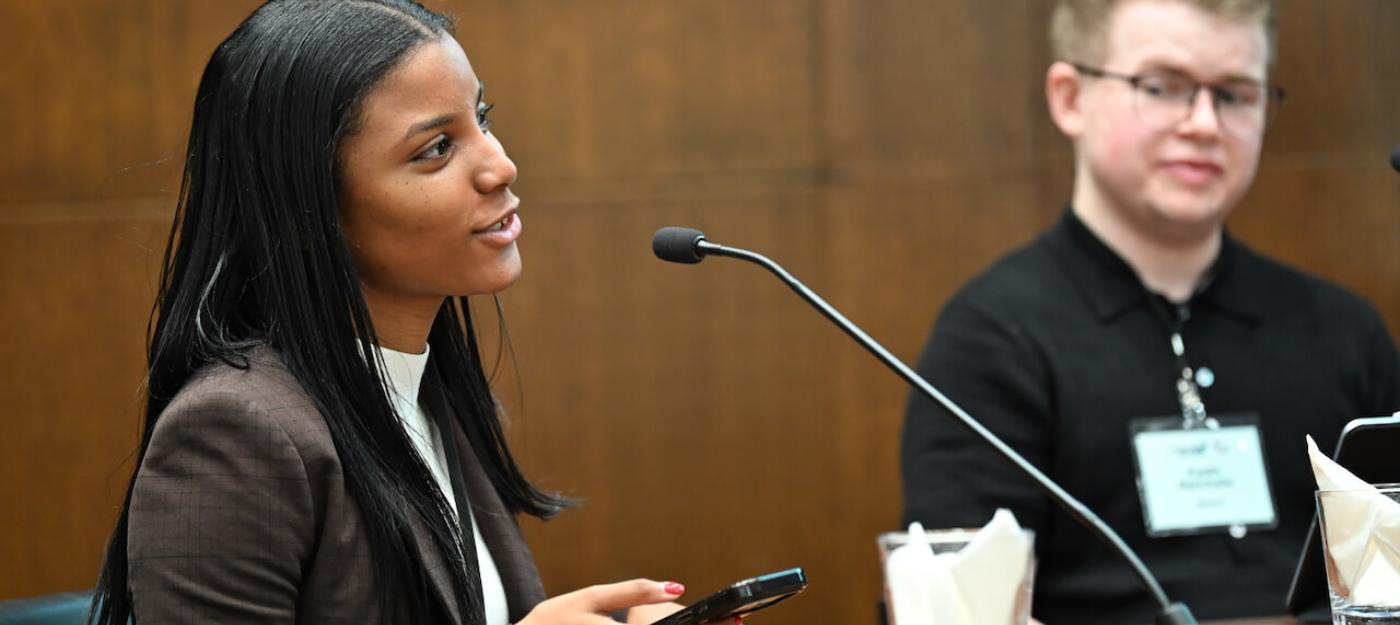
"Just be willing to have a conversation, just be willing to learn with us"
Youth voices on inclusion as the future of work
Published:
This podcast-style Journey features youth with disabilities and neurodivergent identities coming together to explore pathways to employment, workplace experiences, barriers, and recommendations for employers. They describe how meaningful work opportunities helped shape their career goals, confidence, independence, and sense of belonging. They emphasize the value of co-op placements, mentorship, supportive supervisors, and inclusive programs that allow them to demonstrate their capabilities and build professional networks.
Persistent barriers, including inaccessible hiring practices, bias after disability disclosure, transportation challenges, inflexible policies, assumptions about capability, and workplace cultures that encourage masking rather than authenticity are highlighted. Solutions, which benefit many employees, not only those with disabilities, are described, including: flexibility, written instructions, mentorship, additional processing time, and remote or hybrid work arrangements.
The youth in this Journey want employers to move beyond viewing disability as a compliance issue and instead focus on collaboration, individualized support, dignity, and opportunity. They called on employers to rethink traditional workplace structures, remove unnecessary barriers, recognize ambition, and actively ask employees what support they need to succeed.
Key Takeaways
- Design flexibility into work, not just accommodations. Flexible scheduling, remote work options, altered hours, and individualized approaches benefit a broad range of employees and create more inclusive workplaces.
- Make hiring processes accessible from the start. Providing interview questions in advance, using plain language, simplifying application systems, and eliminating unnecessary barriers enables candidates to demonstrate their skills rather than their ability to navigate complex processes.
- Focus on partnership, not assumptions. Employees with disabilities are experts in their own needs. Managers do not need all the answers; they need a willingness to listen, learn, and collaborate on solutions.
- See potential and ambition, not disability. Young people with disabilities want career growth, leadership opportunities, and meaningful contributions. Employers should take their aspirations seriously and create pathways for advancement, not just entry-level inclusion.